
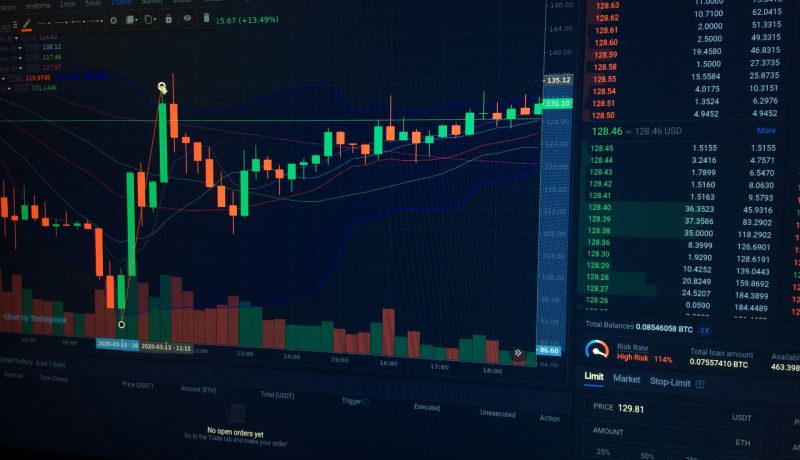
Are leverage and margin the same in trading?
No. Leverage and margin are closely related in trading, but they are not the same thing.
The easiest way to understand them is:
- Leverage: How much larger a position you can control compared with your own money.
- Margin: The amount of your own money required to open and maintain that position.
- Example: Trading with 10x leverage
Suppose you want to trade Bitcoin worth $1,000.
You have $100 in your trading account.
| Concept | Amount |
| Your capital (margin) | $100 |
| Leverage | 10x |
| Total position size | $1,000 |
Your $100 margin allows you to control a $1,000 position using 10x leverage.
- How are they related?
The formula is:
Leverage = Position Size ÷ Margin
And:
Margin = Position Size ÷ Leverage
For example, to open a $1,000 position:
| Leverage | Required Margin |
| 2x | $500 |
| 5x | $200 |
| 10x | $100 |
| 20x | $50 |
| 50x | $20 |
| 100x | $10 |
- How do they affect profit and loss?
Suppose Bitcoin moves up by 5%, and you have $100 as margin.
| Leverage | Position Size | Profit from 5% Rise |
| 1x | $100 | $5 |
| 5x | $500 | $25 |
| 10x | $1,000 | $50 |
| 20x | $2,000 | $100 |
However, remember that losses are magnified by the same amount.
For example, a 5% fall with 20x leverage results in an approximately 100% loss of your initial margin, before fees and liquidation mechanics.
- Two important types of margin
- Initial Margin: The amount required to open a leveraged position.
- Maintenance Margin: The minimum equity you must maintain to keep your position open.
If your account equity falls below the required maintenance margin, your position may be liquidated.
- The key difference
- Leverage = Buying power
- Margin = Required collateral
They work together, but they have different meanings.
Simply put: Leverage determines how much you can trade, while margin determines how much money you need to put up to open that trade.



No Comment! Be the first one.